
PPA contracts
We structure PPA contracts for producers and consumers who want predictability, renewable energy, and efficient market risk management.
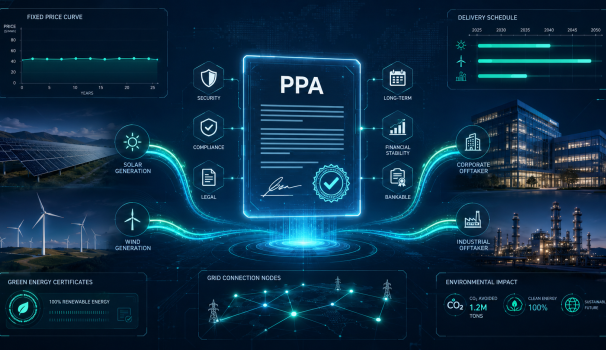
PPA contracts for predictability, green energy and long-term stability
PPAs can provide a bridge between renewable energy producers and corporate consumers who want predictability, access to green energy and a medium to long-term commercial structure. An effective PPAs must balance the interests of both parties: revenue stability for the producer and cost control for the consumer.
Voltika Energy can support the structuring of standard or customized PPA contracts, depending on the production profile, consumption, duration, risk and commercial objectives. Models can include fixed price, spot, spot+, minimum and maximum price formulas, as well as structures tailored to renewable portfolios or large consumers.
For producers, a PPA can support production capitalization, project financing, and reducing exposure to market fluctuations. For consumers, it can contribute to predictability, access to renewable energy, and support sustainability goals.
PPAs can be complemented with forecasting, balancing, imbalance management, energy supply and Guarantees of Origin, where applicable and where the contractual framework allows.
Types of PPA Contracts
The fixed price model guarantees a contractually set price for the energy delivered and can ensure stable and predictable revenues for renewable energy producers.
- Role in the main category: part of PPA Contracts, as a model oriented towards stability and predictability.
- Main benefit: gives the producer a clearer basis for revenue planning and project financing.
- Suitable for: producers who prefer protection from market volatility and medium to long-term visibility.
- It guarantees a fixed price and ensures stable and predictable income for producers.
The spot model offers flexibility in production, without rigid production obligations, and prices are linked to local energy exchanges. This model allows the producer to stay connected to market dynamics.
- Role in the main category: part of PPA Contracts, as a model oriented towards flexibility and market exposure.
- Main benefit: allows production to be capitalized based on spot market prices.
- Suitable for: manufacturers who accept market volatility and seek commercial flexibility.
- It offers flexibility in production, without rigid obligations, with prices correlated to local energy exchanges.
The Spot+ model combines partial production hedging with spot market opportunities. This model seeks a balance between market flexibility and price risk protection.
- Role in the main category: part of PPA Contracts, as a hybrid model between protection and access to market opportunities.
- Main benefit: reduces total exposure, while maintaining the possibility of benefiting from favorable prices on the spot market.
- Suitable for: producers who want partial production coverage but don't want to completely give up market upside.
- It allows partial production hedging combined with exploring opportunities in the spot market.
The floor and ceiling price model establishes a price range through a floor and a cap. The producer benefits from protection against sharp price drops while maintaining exposure to market fluctuations within the defined range.
- Role in the main category: part of PPA Contracts, as a model of protection and controlled flexibility.
- Main benefit: limits risk through a minimum price and defines a clear framework for price variation.
- Suitable for: producers seeking protection against price risk but want to retain a market share.
- It ensures a minimum price (Floor) and a maximum price (Cap), allowing participation in the spot market within the defined range.
Contract administration:
we track performance and support the adaptation of commercial decisions.
Operational integration:
we correlate PPA with forecasting, balancing, provisioning and reporting.
Commercial structuring:
we define the PPA model: fixed, spot, spot+, floor/cap or hybrid.
Analysis of the parts:
we evaluate the profile of the producer and consumer: volume, risk, duration, objectives.
What does the service include?
- Merchant PPA for renewable producers.
- Corporate PPA for large consumers and companies.
- Fixed price, spot, spot+ or hybrid formula models.
- Floor/cap structures to limit risk.
- Analysis of production and consumption profile.
- Integration with forecasting, balancing and imbalance management.
- Options regarding Guarantees of Origin, where applicable.
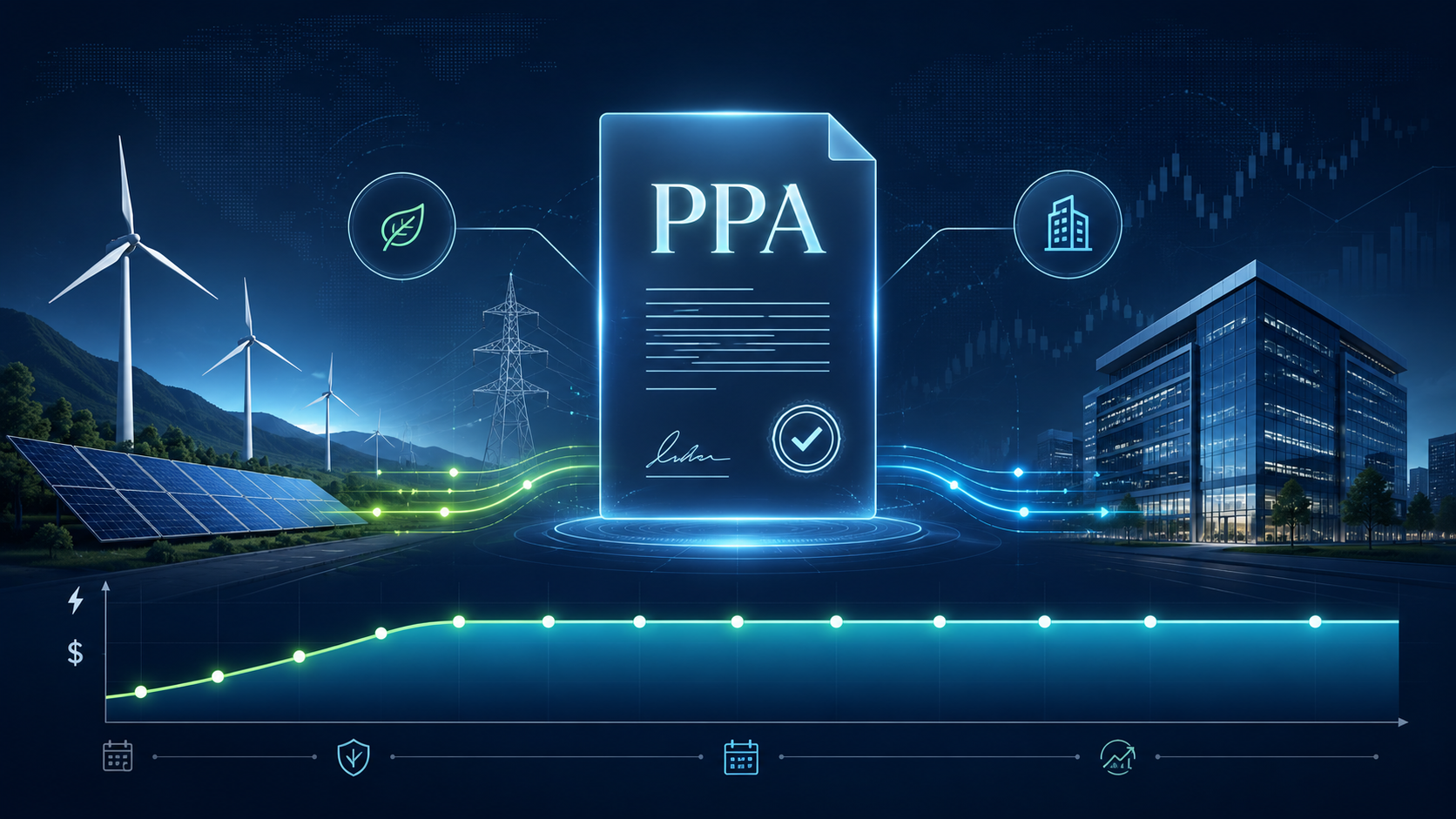
Customer benefits
predictability
Contracts that can stabilize income or costs over the longer term.
Renewable energy
Access to green production for corporate consumers.
Risk management
Commercial formulas adapted to the exposure accepted by each party.
Bankability
For producers, the PPA can support financial planning of projects.
Operational integration
Forecasting and balancing for better contract management.
Frequent asked questions (FAQs)
A PPA is an energy purchase contract, usually medium or long term, between a producer and a buyer, with an agreed commercial formula.
A merchant PPA is oriented towards the valorization of production by the producer, and a corporate PPA connects renewable production with the needs of a corporate consumer.
Yes, forecasting can be an important component for planning deliveries and managing imbalances associated with renewable generation.
Who is it suitable for?
Choose a PPA structure that suits your production, consumption and risk profile.
